The Mead Learning Journey
From Curiosity to Mastery
The Mead School nurtures in each child the power to create a personally meaningful life by fostering deep learning as well as the social awareness necessary to thrive in an interconnected world.
We Value:
What Does Engagement Mean at Mead?
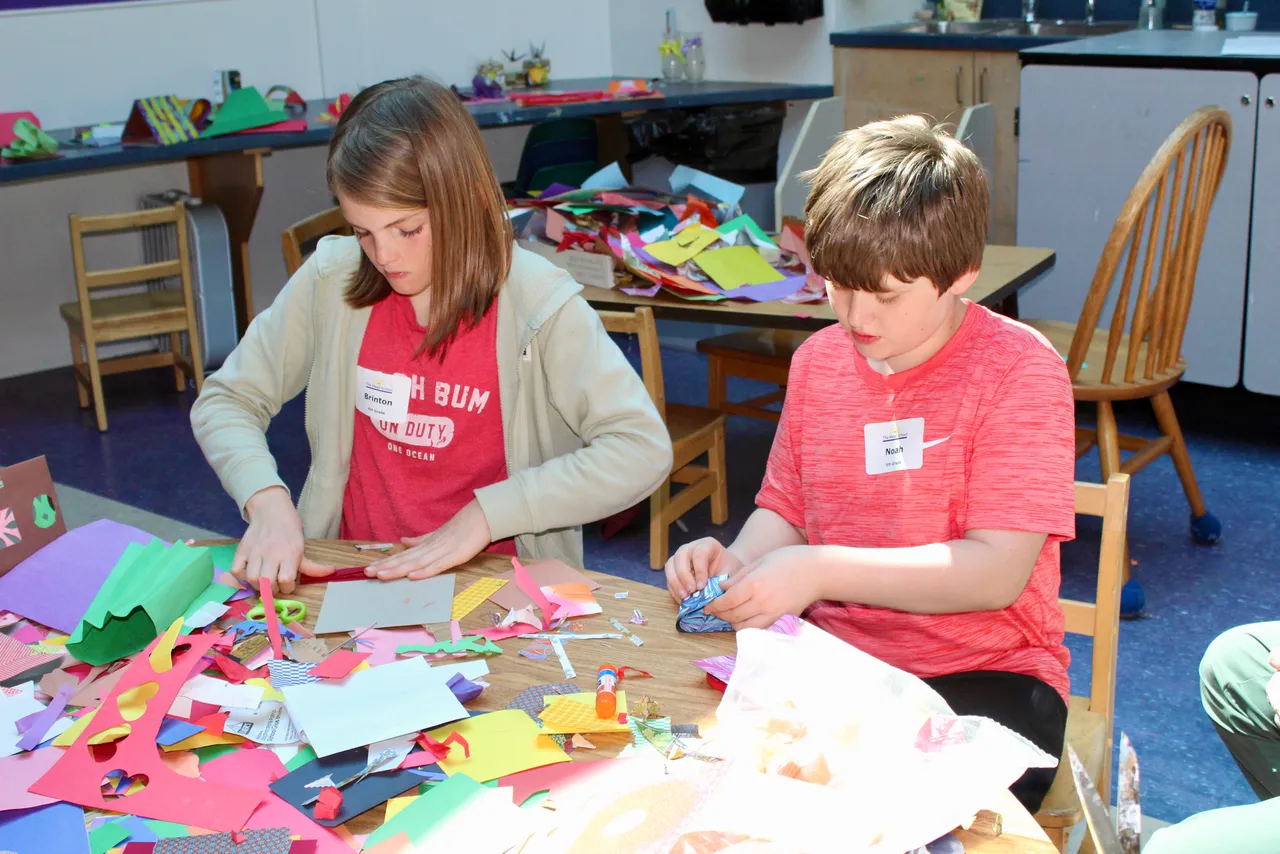
At Mead, engagement is not defined by enjoyment alone. It grows from the relationship between joy and challenge in learning.
We intentionally prefer the word challenge to rigor. Children are most willing to take intellectual risks when curiosity draws them into what they are exploring. Joy invites students into the work; meaningful challenge deepens that engagement.
As students wrestle with complex ideas, solve difficult problems, and experience the satisfaction of understanding something new, their sense of joy expands.
In this way, joy and challenge are not opposites. Each strengthens the other. Joy creates the openness to be challenged, and success in meeting those challenges builds confidence, resilience, and a deeper sense of discovery.
This dynamic is what we mean by an engaged childhood, and it is central to a Mead education.
Early Childhood (Pre-K-Kindergarten)
Curiosity and Discovery
Children are natural explorers. At Mead, we preserve and nurture this early impulse, planting the seeds for a lifelong love of learning.
During these years, students begin to:
- explore the world through hands-on discovery and play
- build confidence in expressing ideas and emotions
- develop early literacy and numeracy foundations
- learn how to collaborate and participate in a community
Sample Experiences
Engineering Through Play
Students design and refine engineering projects such as marble runs through multiple iterations, learning persistence, experimentation, and creative problem solving.
Body Mapping and Self-Discovery
Children create body-mapping projects that help make self-awareness and personal discovery visible through art and reflection.
Greenhouse and Garden Exploration
Students use the greenhouse and gardens to study science, mathematics, observation, and the natural world.
Multi-Sensory Literacy Development
A multi-sensory phonics program helps students build foundational reading and language skills through movement, sound, and tactile learning.
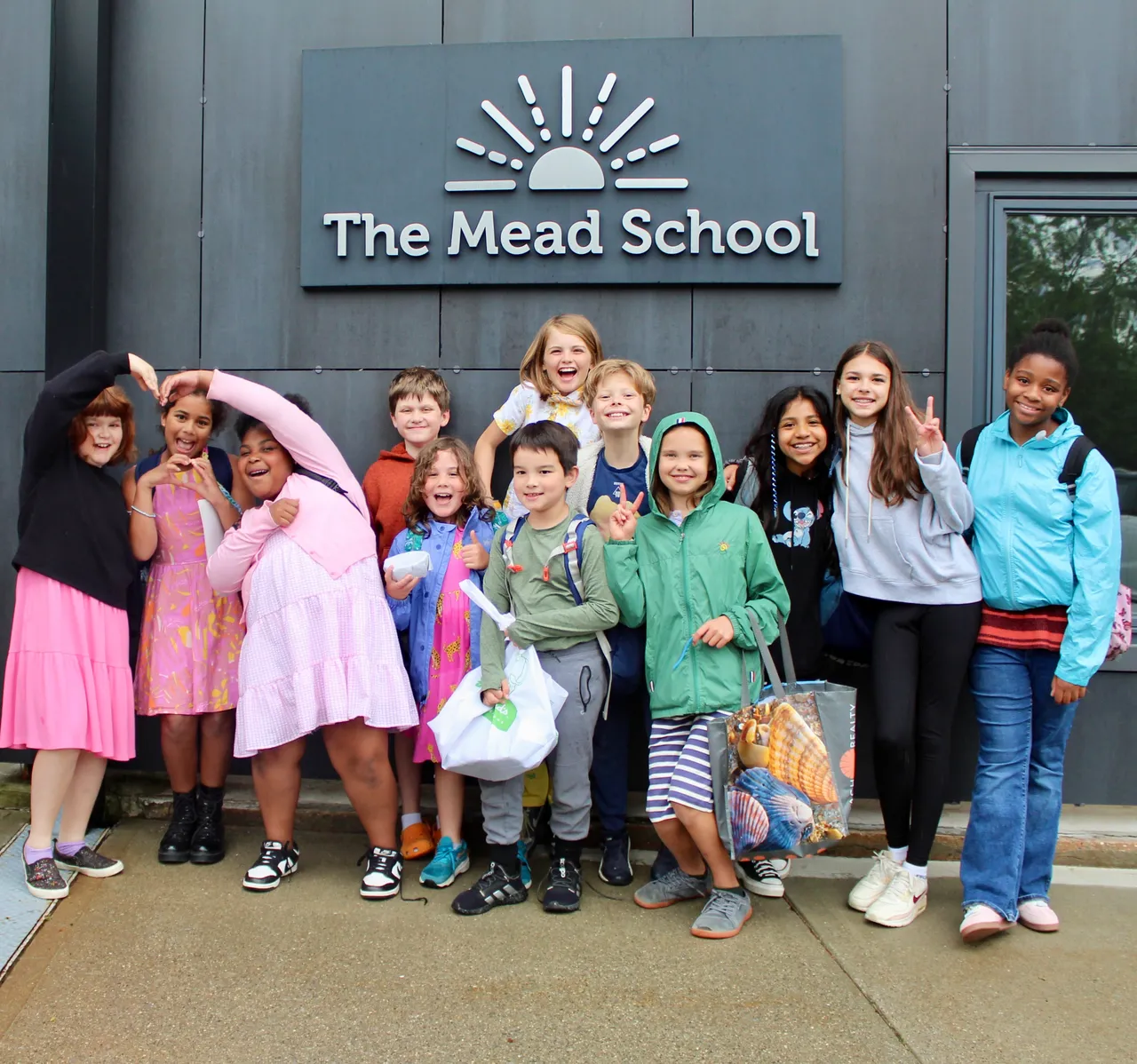
These years focus deeply on helping children learn how to listen, collaborate, resolve conflicts, and understand their own emotions. This foundation prepares students for increasingly structured academic work while preserving their natural joy in learning.
Lower School (Grades 1-2)
Foundations and Confidence
In Grades 1 and 2, students begin to see themselves as capable and independent learners.
During these years, students begin to:
- read more independently
- communicate ideas through writing and discussion
- solve problems using multiple strategies
- investigate scientific questions through observation and experimentation
- build confidence in their thinking and creativity
Sample Experiences
Guided Play: Inquiry-Based Learning Studio
A daily, intentionally designed block where children engage in self-directed, collaborative exploration while teachers observe and extend student thinking through questions and prompts.
Hotel Math Unit
Students explore early multiplication concepts by designing and building hotel models using repeated addition, equal groups, and arrays. Through this work, they recognize patterns, develop flexible problem-solving strategies, and communicate their mathematical thinking.
Animal Research and Information Writing
Students investigate an animal of interest, organize their findings into key categories, and publish their own nonfiction books.
Scientific Observation and Creative Expression
Students combine close observation, artistic exploration, and early scientific inquiry to deepen both academic understanding and creative confidence.
Collaboration and empathy become increasingly important as students learn how to work together, appreciate different perspectives, and contribute meaningfully to a classroom community.
Intermediate Years (Grades 3-4)
Connection and Independence
Grades 3 and 4 mark an important transition toward greater independence.
During these years, students begin to:
- conduct scientific investigations
- write longer and more complex pieces across genres
- explore mathematical reasoning and inquiry-based problem solving
- study cultures and perspectives from around the world
- research, present, and communicate ideas publicly
Sample Experiences
Owl Study: Art and Science Integration
Students study multiple owl species through close observation and scientific research before creating detailed hand-built ceramic owl sculptures using pinch, coil, and slab techniques.
World Cultures Study
Students begin with the cultures represented within their own families through interviews and storytelling before expanding outward into global geography, folktales, and cultural traditions.
Reflection Across Curriculum
Students formally reflect on their strengths and areas for growth through structured reflection practices embedded across academic subjects.
Handbell Ensemble
Through handbells, students experience how individual parts contribute to a larger whole, developing listening skills, collaboration, and collective responsibility.
Building on empathy and collaboration, students deepen their understanding of social awareness, interdependence, and community.
Middle School (Grades 5-6)
Analysis and Perspective
As students enter middle school, learning becomes increasingly analytical and interdisciplinary.
During these years, students begin to:
- explore complex questions and multiple perspectives
- support ideas with evidence and research
- connect learning across disciplines
- communicate ideas to authentic audiences
- develop resilience and ethical awareness
Sample Experiences
Exhibition of Curiosity
Students create projects designed for authentic public audiences, expanding their ability to communicate ideas clearly and thoughtfully.
Sixth Grade Marine Science Program
This year-long program combines field research, scientific investigation, and environmental studies while emphasizing interdisciplinary thinking across science, social studies, and environmental ethics.
Jewelry and Enameling
Students explore the art and science of enameling by melting powdered glass onto copper plates, experimenting with materials, techniques, and kiln processes.
Pokémon Math Project
Students apply probability, statistics, and algorithmic thinking to real-world entrepreneurial and commercial scenarios.
Study of Ancient Civilizations
Students analyze ancient cultures through historical evidence, reconstruction, and discussion, developing a more sophisticated understanding of human societies.
As pre-adolescents, students also focus intentionally on resilience, conflict resolution, the challenges of social media and artificial intelligence, and the development of a strong ethical sense of self.
Upper Middle School (Grades 7-8)
Mastery and Self-Direction
By their final years at Mead, students are ready for greater independence.
During these years, students begin to:
- pursue long-term independent projects
- articulate themselves clearly as learners
- develop leadership and self-reflection
- synthesize knowledge across disciplines
prepare for the intellectual demands of high school
The Graduation Ritual
The culmination of the Mead experience is the Graduation Ritual, in which students:
- complete an independent mastery challenge
- create a personal reflection artifact
- write a reflective essay
- present and defend their work before a faculty panel
This graduation requirement reflects Mead’s commitment to authentic mastery and prepares students for the intellectual and personal demands of high school.
Sample Experiences
Shakespeare Production
All seventh and eighth graders participate in and help produce a full Shakespearean drama, developing confidence, collaboration, and public speaking skills.
American Culture Seminar
In this interdisciplinary two-year study, students explore the guiding question: What does it mean to be an insider or outsider in America?
Topics include constitutional law, immigration, identity, and the Holocaust, approached through multiple disciplinary perspectives.
Push Cart Engineering Project
Students collaborate in small groups to design and build wooden push carts while learning practical engineering, woodworking, and design principles. The project culminates in a series of races and team competitions
Athletics and Teamwork
All students participate in one or more competitive sports, including soccer and basketball, building resilience, teamwork, discipline, and school spirit.
In collaboration with families, Mead supports each student’s search for a right-fit secondary school — itself an important step toward independence and self-understanding.
The Journey Ends — and Begins Again
The Mead journey does not conclude at graduation. It continues as students carry forward the habits of curiosity, reflection, resilience, and purposeful engagement they have developed throughout their years at Mead.
By the time Mead students graduate, they are not only academically prepared for a wide range of first-choice secondary schools, but also confident, thoughtful, and self-aware.
Graduates tell us that Mead’s mission — cultivating the capacity to lead a meaningful life — feels real and lasting. They leave with intellectual confidence while still retaining a sense of curiosity, creativity, and play.
Mead Graduates Know How To:
- Ask bold and meaningful questions
- Apply knowledge creatively and think critically
- Communicate ideas clearly and thoughtfully
- Reflect honestly on their own growth
The journey toward mastery is never finished. Mead students leave prepared not only to succeed, but to continue discovering, questioning, and growing throughout their lives.